
Industry focus
Highway & fuel stations
Engineered for the application.
04 / 07
Build DC fast-charging hubs at fuel stations, food courts and highway stops where drivers need a quick, reliable charge.
In plain words
Fast, visible and always working.
On a highway, drivers can’t wait for a broken charger to be fixed. Highway charging has to be fast, visible from the road and working every time. On routes like Hyderabad–Vijayawada or Hyderabad–Bengaluru, one out-of-service charger can mean a long detour.
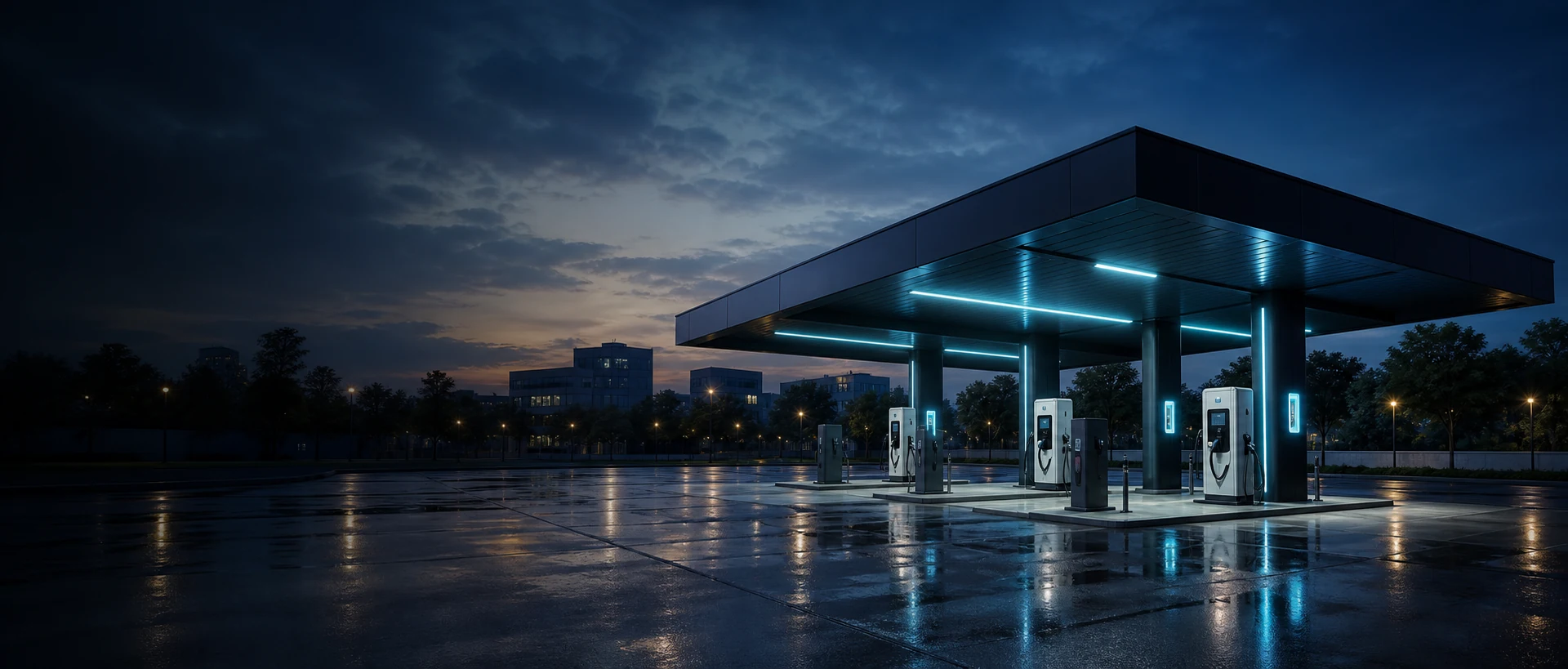
These sites usually need the most engineering: high-power DC chargers, often an HT connection with a dedicated transformer, a canopy, and a forecourt layout that lets vehicles move in and out easily. We plan the power first, because on highways the grid connection usually decides the timeline, and leave room to add more chargers later.
Delivery priorities
Designed around
operating reality.
Uptime drivers can rely on
Space to add chargers as traffic grows
Typical infrastructure scope
Grid and HT connection planning
DC fast chargers, canopy and forecourt works
Transformer, panels and protection
Remote monitoring coordination and AMC
Questions
Frequently asked.
Can a petrol bunk add EV charging?
Yes, and it’s one of the most practical locations: the land, access and footfall are already there. Chargers must be placed with the required safety clearances from fuel-dispensing areas, which we plan into the layout.
How much power does a highway charging hub need?
It depends on the number and rating of the chargers. A few DC fast chargers together can quickly go beyond what a standard LT connection provides, so many highway sites need an HT connection and their own transformer. The load study tells you exactly what your site needs.
Start with the site