
Industry focus
Fleet & logistics
Engineered for the application.
04 / 07
Build depot charging around vehicle duty cycles, turnaround windows, route requirements and future fleet growth.
In plain words
Charged before the morning shift.
For a fleet, charging isn’t a convenience. It’s part of operations. If vehicles aren’t charged by the morning shift, trips and deliveries are missed. Whether you run e-autos, delivery two-wheelers, cabs or electric trucks, the depot has to be planned around your routes and shift timings.
We look at how many vehicles come back when, how much energy each one needs, and how much power your depot can get. From that we plan the right mix, usually AC for overnight charging and a few DC chargers for quick top-ups, and build the depot in phases so you aren’t paying for capacity before your fleet grows.
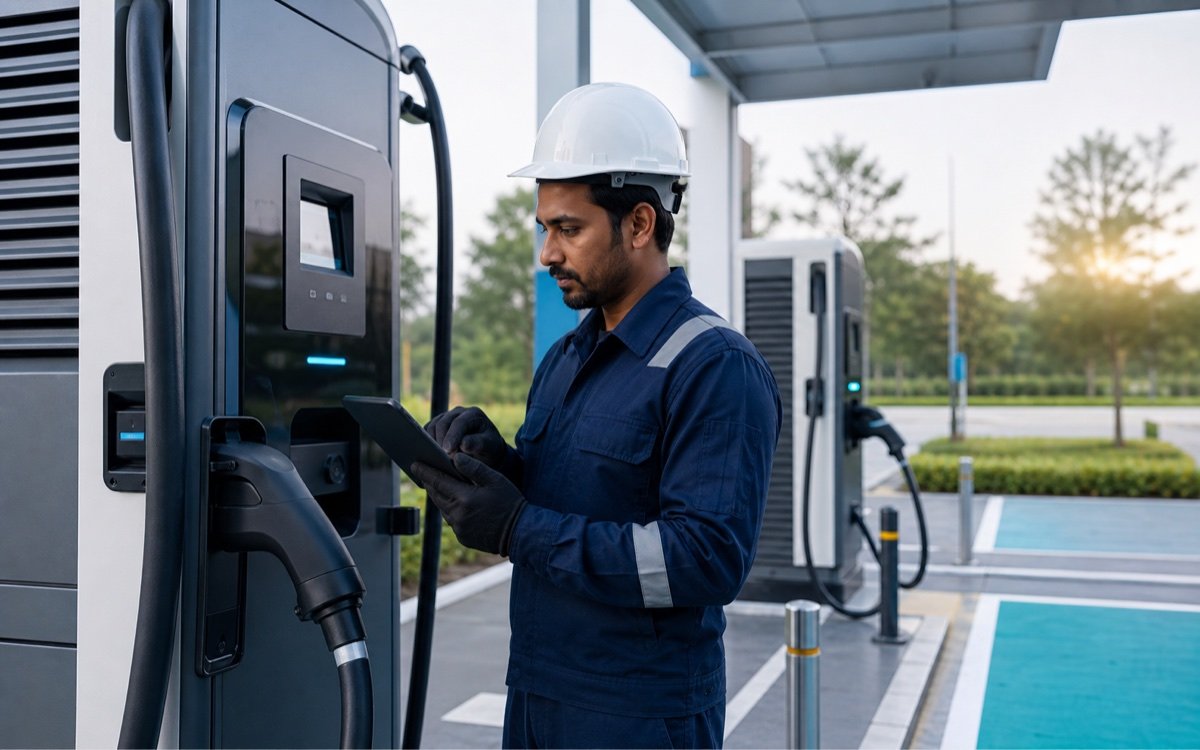
Delivery priorities
Designed around
operating reality.
Phased depot power capacity
Operational continuity
Typical infrastructure scope
Fleet load assessment
Depot electrical and civil design
Charging infrastructure rollout
Preventive maintenance and AMC
Questions
Frequently asked.
Should a fleet depot use AC or DC chargers?
If vehicles are parked overnight, AC charging is usually enough and far cheaper to install. DC fast chargers make sense for vehicles that run double shifts or need a quick top-up between trips. Most depots end up with a mix.
Can we add chargers as our fleet grows?
Yes, and that’s how we plan it. The first phase sizes the cables, panels and space for later chargers, so adding more doesn’t mean digging up the depot again.
Can chargers share power so we stay within our sanctioned load?
Many networked chargers support load management, sharing the available power between vehicles. Whether it fits depends on the charger model and your shift pattern, and we check this during design.
Start with the site