
APP infra

Residential EV charging · 03 min

How to plan EV charging for an apartment community
A practical field perspective.

06 / 07

A practical starting point for RWAs and developers: demand, parking, electrical capacity, billing and long-term operations.

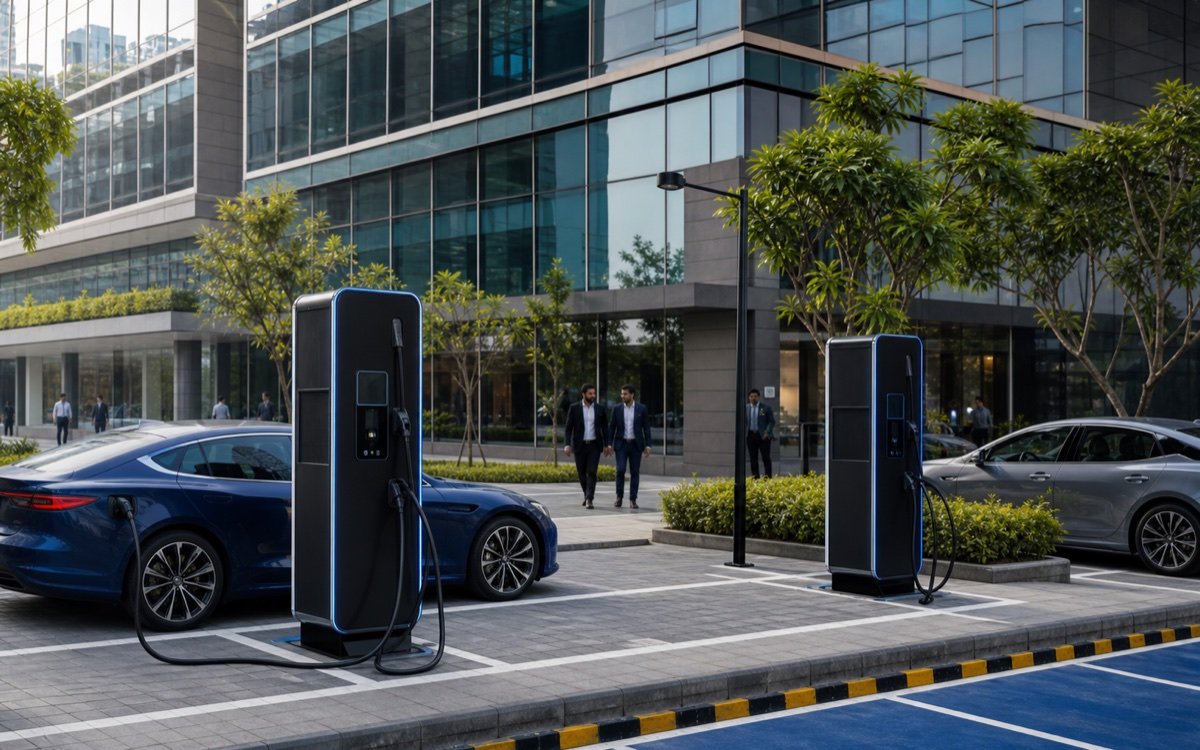
EV charging bays at a modern building

Engineering note

Decisions that improve delivery.

01

Start with residents and parking

Count current EV users, likely near-term requests and the parking bays where charging could be installed. Ask how long vehicles usually remain parked; overnight dwell time changes the charger mix. A plan for a few initial bays should also show where later bays and cable routes can go without repeatedly disturbing common areas.

02

Check the electrical system before choosing chargers

Record the sanctioned supply, transformer and panel details, existing peak demand, spare ways and the route from distribution equipment to the parking area. A qualified electrical designer should assess whether the proposed simultaneous load can be supported and whether an upgrade, dedicated connection or managed charging approach is appropriate. Charger nameplate ratings alone do not establish site readiness.

03

Decide who pays and who operates

Agree whether chargers will be individually assigned, shared by residents or open to visitors. That choice affects metering, access control, tariff display, payment collection and maintenance responsibility. The RWA or developer should document who approves new users, handles faults, settles electricity costs and receives usage reports before equipment is ordered.

04

Make safety and access part of the layout

The design must consider cable protection, isolation, earthing, drainage, pedestrian movement, fire access and the actual parking geometry. Avoid ad-hoc extension leads or a cable path across a walkway. Applicable electrical safety requirements and local approval conditions should be checked for the specific property by the project engineer and relevant authority.

05

Specify a phased handover

A useful first-phase package includes a site survey, load assessment, layout, single-line diagram, charger specification, civil and electrical scope, test records and an operating handover. Reserve realistic space and distribution capacity for expansion, but purchase chargers against confirmed demand rather than an arbitrary future number. That keeps the proposal practical for both today's residents and the next phase.

Continue exploring

Bring the thinking
into the project.

Start with the site

Let’s engineer what’s next.

Request a Free Site Survey