
APP infra

Charger procurement · 03 min

An EV charger procurement checklist beyond the price tag
A practical field perspective.

06 / 07

Compare equipment, electrical scope, software, service and handover as one operating system.

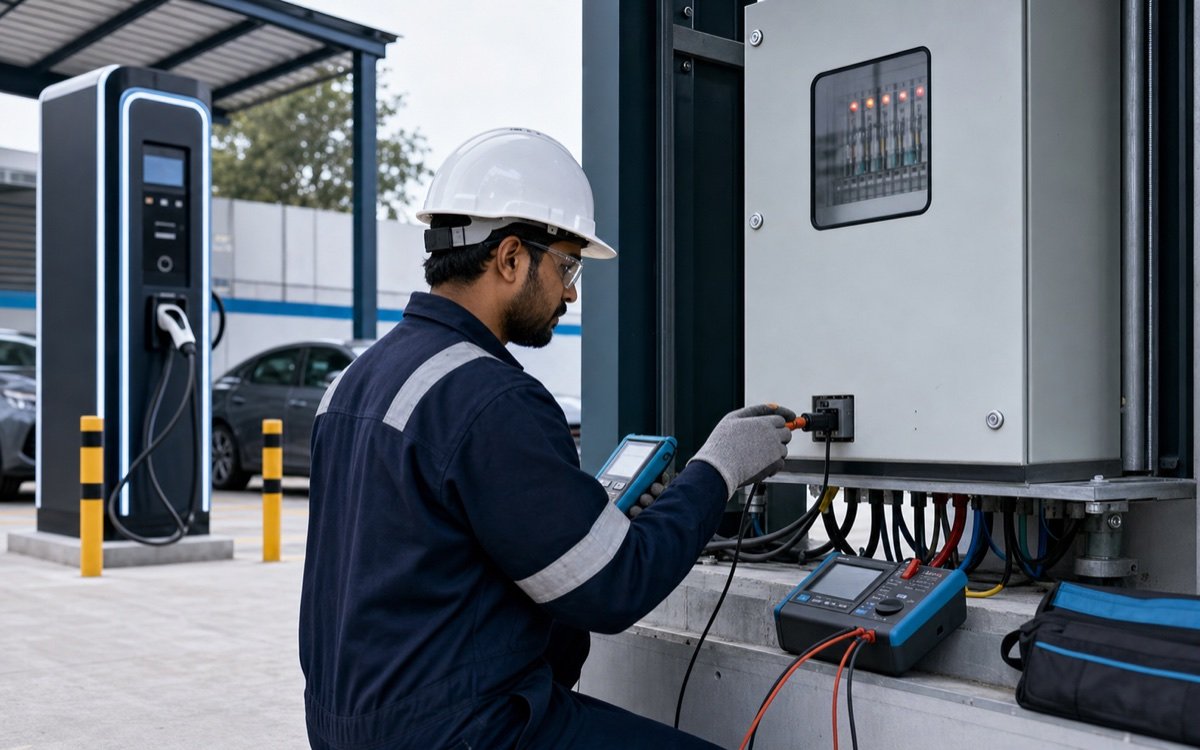
Engineer testing an EV charging installation before handover

Engineering note

Decisions that improve delivery.

01

Write a use-case specification first

Tell suppliers where the charger will operate, which vehicles it must serve, how long they park, the expected number of simultaneous sessions and who will use it. Include indoor or outdoor location, parking geometry, cable reach, network availability and the planned expansion path. This lets suppliers propose a suitable solution instead of simply quoting a familiar model.

02

Compare the complete scope

Separate the charger price from freight, installation, foundations, cabling, panels, protection, metering, networking, approvals, testing and commissioning. Identify which party owns each item and where the supply boundary lies. Two offers can appear comparable on equipment price while carrying very different site-work obligations and timelines.

03

Verify compatibility and operation

Ask for the proposed connector and vehicle compatibility, the user authentication and payment flow if needed, the software or backend arrangements, usage reporting and fault visibility. If a third-party platform is required, confirm the integration responsibility in writing. Request a demonstration or reference installation that matches the intended operating model.

04

Define support and acceptance

Compare warranty scope, exclusions, response process, spare-parts availability, software support, service escalation and what happens after the warranty period. Before purchase, agree the factory or site acceptance criteria, test records, training and handover documents. A clear acceptance checklist prevents a physically installed charger from being mistaken for an operational station.

05

Choose on lifecycle fit

The best-value offer is the one that meets the approved use case with a buildable electrical design and a support model the owner can run. Record assumptions, optional items and dependencies in a comparison sheet. Final selection should follow the applicable standards, approved design and local approval requirements; a brand name or headline power rating cannot replace that review.

Continue exploring

Bring the thinking
into the project.

Start with the site

Let’s engineer what’s next.

Request a Free Site Survey